
This Board is Not Boring!
 Over the years, I’ve sat on a number of boards and committees. Many of them were, well, boring. They were about budgets and numbers and a lot of what seemed like rubber-stamping.
 Autism Alberta’s Board of Directors is composed of inspired, passionate people who use both head and heart to move Alberta toward a better quality of life for people on the spectrum. The good news is that there is currently room for you to join this forward-thinking board! If you are concerned about the issues surrounding people who are affected by autism, please consider joining our board. I can promise it won’t be dull!
Red Deer, AB
Child Care is available, but please BE SURE to let us know by Thursday, August 24, 2017 at jscheyen@hotmail.com
Autism RWMB Receives Autism Ambassador Grant
There are not enough words describe how much it means to me, and to my community, to receive The Autism Ambassador Grant.
I was born and raised in Fort McMurray. My son was diagnosed with autism at two years old in 2012. We joined the only Autism Support Group we knew of in our area, and until recently things remained pretty much the same in our local autism community.
That all changed last year when our community faced an evacuation. Our families were able to experience supports and services available in other areas, and it was an eye-opener. After the evacuation our group got smaller, and since then we have been trying to bring our autism community back together.
Receiving the ambassador grant means we have been able to connect with families in our region we never knew before. We have been able to provide parent-to-parent support. We have been there for families in crisis. When they had nowhere else to turn, they called us.
Before this grant we were just a bunch of parents who would randomly meet to talk at a friend’s house. Now, with this grant, we are able to reach out and connect people throughout our whole region. We are bridging the gap so people don't have to feel so isolated and alone.
I said it before: words cannot describe how much this Autism Speaks Canada Grant means to our community. Thank you.
 Kirsti Mardell
Autism Ambassador of the RMWB
The author(s) of this publication hereby acknowledge(s) the Family Services Community Grant received from Autism Speaks Canada, the funding agency for the project leading to this publication. The views expressed in this publication do not necessarily express or reflect the views of Autism Speaks Canada.
The Virtues of Being a Regular
When you have a loved one with autism, going places can be challenging. There are noises, lighting, smells, tastes, air movement, or people inadvertently touching as they pass by. There might be limited space for big movement ‘stimming’. People may or may not be understanding of strange vocalizations, meltdowns, or odd rituals and patterns.
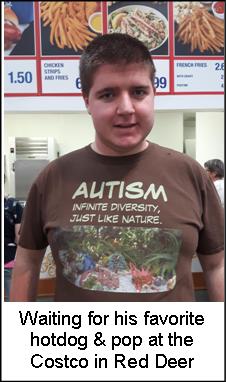 Going out in public can require lots of planning. It’s important to think ahead of things like timing a trip to avoid the biggest crowds or to not go when tired, or bringing comforting objects or items to distract when needed. There are many more strategies that we sometimes use to optimize the chance of a successful excursion. However, today I want to talk about the virtue of being a regular.
There can be many benefits from being a frequent visitor to the same places. At retail businesses, the staff get to know you by sight, and, if you encourage interaction, by name. We are regulars at Costco. Eric is hard to miss; he is 6 feet tall, has big movements and unusual vocalizations, can have a patterned gait to his steps, and is often scripting (repeating favorite lines from movies or games). Sometimes he is wearing his humorous autism t-shirts, which also draws friendly people to us. Even other regular customers often come and speak to us.
Many of the staff at our local Costco go out of their way to greet him. I’ve had many opportunities to tell them tidbits about Eric’s autism (with his permission). Quite a few know his name; a couple even know mine. There have been times when he’s having a rough day or sounds upset. Once or twice, when he was younger, I ducked into a ‘staff only’ area to calm Eric, and they were very understanding.
There are other retail places we are regulars at: Walmart, EB Games, Mac’s, Sobey’s, and Toys “R” Us, as well as many smaller local businesses. We are also regulars at certain movie theatres, museums and parks. At all of these places Eric seems more relaxed to some degree. He knows what to expect there, and has already developed many coping skills for these locations – another benefit of being a regular.
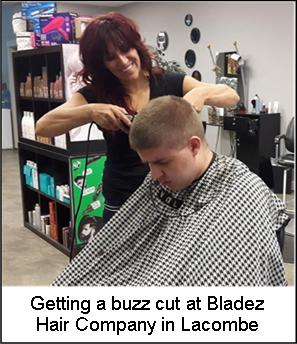
There is also the service industry to consider. Think restaurants, hair dressers, massage therapists, doctors, dentists, specialists and many more. We have been going to the same hair salon for 11 years. Eric can now accept various stylists there to give him a buzz cut. They know to use less pressure while shaving, as light touch can be painful. They know to not touch him unnecessarily, to never use scissors, and to not spray his hair with water.
 Likewise, we’ve been going to the same dental office since Eric was 5 years old. It took a ton of exposure therapy, patience and time, but eventually Eric did not have to be put under once a year for a check up, cleaning and fillings. When we first contacted them, our dentist and his assistant even visited our home to meet Eric in a setting familiar to him, and we live an hour out of the city!
So although I would never suggest that we stop exposing our autistic family members to new places or experiences, I do believe that a balance of the familiar and the untried is the way to go. For Eric, the right ratio would be about 75% familiar, 25% untried. The right mix will be different for everyone. In becoming a regular, people at that location tend to become interested and invested in you. And you become interested and invested in them, too – it’s a reciprocal relationship.
I often ask Eric if it’s okay to tell others about his autism. People have great capacity to learn, and to open their hearts and minds. To afford them every opportunity, I adopt a very open policy when it comes to sharing about Eric and the challenges he faces. It is to his benefit, and the benefit of the people whose lives he touches.
Kitty Parlby is the mother of a son with severe autism, a former special needs educational assistant, a board director for the Autism Society of Alberta, and the owner of Autism Inspirations, an autism speaking and consulting business.
Autism Edmonton Introduces Two New Mentorship Programs

 We know that an autism diagnosis can sometimes come with a feeling of isolation. It can feel overwhelming to try to navigate the next steps and connect with all of the resources available in the community. Autism Edmonton exists to provide support to people in this situation, but we know that sometimes what our members really need is to be connect with someone else who “gets it”. Someone who has been there and can share their experiences and what they've learned with someone newer to the autism community. Or, in the case of adults with autism, someone who has successfully navigated some of life’s milestones and challenges.
We heard from parents and individuals that they would like more one-on-one support, so we listened. We researched other organizations in Canada and North America that have similar programs (honestly, there aren’t that many!). We asked questions of our members – both parents and adults on the spectrum. We sent out a survey and got many responses. From there, we held a focus group and listened some more. We consulted with parents and adults on the autism spectrum to review our processes and paperwork. We are now in the infancy stage of piloting two mentor programs: AAMP (Adult with Autism Mentor Program) and P2P (Parent to Parent Mentor Program).
We are accepting applications from both mentees and mentors to commit to a pilot 6-month mentorship match. You can learn more about the requirements of participation on our website.
Practical Tips for Living Successfully on the Autism Spectrum
Autism Research Centre (ARC) Presents Practical Tips for Living Successfully on the Autism Spectrum
Join us at our upcoming FREE information session!
Date: Friday, July 14th, 2017
Time: 9:00 AM–12:00 PM
Location: Robbins Learning Center Theatre, Royal Alexandra Hospital, Edmonton
Cost: Covered by donations from the ARC
- Featuring interesting guest speakers
- A chance to network with other families
- Meet our team and hear about our research findings
SPEAKER SESSIONS
1. Dealing with Problematic Behaviours
- Restricted and repetitive behaviours
- Picky eating
- When to consider medications
2. Education and Employment for Adults
- Employer capacity
- Worktopia project
- University supports
Please note these presentations are intended for parents, and we are not able to offer childcare. We look forward to seeing you there!
To facilitate organization and planning, please RSVP by June 30th, 2017 to Erin Kapler at erin.kapler@ahs.ca or 780-735-6106 ext. 1
Who Will Take Care of Our Kids (When We No Longer Can)? – Part 2
In last month's issue of Autism Around Alberta we introduced the "Who Will Take Care of Our Kids" study. This research project was spearheaded by Autism Alberta to help find out what is being done to create better futures for adults with autism, and how we can do more. This month we'll be summarizing some of the challenges that adults and caregivers currently face.
 Many adults with ASD, regardless of level of ability, need lifelong supports. In an American survey of 143 families caring for an adult with autism, 58% of adults with ASD needed help with activities of daily living (toileting, bathing, dressing), and 84% needed help with auxiliary daily living skills like bill-paying, cooking and cleaning.
 Accessibility of housing and lack of community infrastructure are not the only issues – the lack of quality is equally problematic, as well. Even if a group home placement can be found, another issue is frequent dissatisfaction with group homes. Lack of staff training, inconsistent quality of care, staff attitudes and institution-like environments are all cited as problems in group home settings. Even in a group home setting, parents are often still involved in supporting the arrangements or acting as a safety net when things go wrong.
The full Who Will Take Care Of Our Kids report can be found online.
We Want to Hear From You!
Epic Camps for Teens

Are you looking for something to do this summer? We have spaces available in two different teen camps!
Star Dreams Drama Camp – July 24 to 28
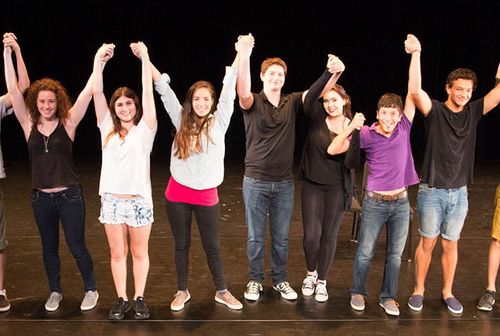
At Star Dreams, you’re the star! Take the stage at the Citadel Theatre and learn all the basics of theatre production, from movement and voice training to theatrical writing and design to acting and improv. The Citadel’s amazing instructor Rebecca Bissonette will help you show off your new skills with your own production on the final day of camp, so remember to Dream Big! Rebecca has performed on many an Edmonton stage and with the support of the Centre’s team she will help you perform, as well.
Time: 9:00 a.m. – 4:00 p.m.
Camp Deposit: $225.00
Note: Teens need to bring a packed lunch and snack every day as well as a water bottle. There are places to fill up water bottles. The Citadel is a nut-free zone, so please no nuts at all in your lunch or snacks.
Drop off and pick up for Star Dreams are at the Citadel Theatre, 9828 101A Avenue, Edmonton.
Photography Week – August 8 to 11

Never leave home without your camera? Not sure which end of the camera to point? Regardless of your level or experience, you’ll have fun developing digital photography skills with the instructor at McBain Camera. You’ll learn camera operation, lighting, and composition. This will help you create that perfect shot. On Friday, you’ll exhibit your work for your adoring fans!
Time: 9:00 a.m. – 4:00 p.m.
Camp Deposit: $225.00
Note: Teens need to bring a packed lunch and snack every day.
Drop off and pick up are at the Centre for Autism Services Alberta office - 4752 99 Street, Edmonton
Contact your caseworker at Disability Services to determine if you are eligible for funding support for either camp. Centre bursaries are available for those who qualify.
To register for either camp, please contact Gail Stanford,
Community and Family Services Coordinator
Phone: 780-488-6600 ext. 216
Email: gstanford@centreforautism.ab.ca
www.centreforautism.ab.ca
Adult Autism Service Opens in Edmonton – Part 2
Consultation Service
 January 2016 marked the beginning of the medical consultation pilot program for adults with ASD, their families and caregivers at the Glenrose Rehabilitation Hospital in Edmonton. Developmental psychiatrists Dr. Ade Orimalade and Dr. Funto Orimalade are both trained and experienced in working with adults having ASD. Along with Speech Language Pathologist Elizabeth Kelly and Social Worker Brittany Thrasher, they make up the core of the consultation team. Referrals are received from primary care physicians or other medical practitioners, who request assistance with managing complex issues experienced by individuals with ASD and their families. The referral form can be found online on the AHS Edmonton Zone website, and the completed form can be faxed to the number provided on the form. The consulting team often receive questions related to medication management, behavioural or psychiatric issues, or other changes in the individual’s condition or presentation. Consultations can occur in person at the clinic site, or via telehealth for those who live outside of Edmonton. Consultation clinics are available two days a month, but follow-up might be scheduled at other times.
Between January 2016, when the clinic opened, and June 2017 there were 23 referrals for consultation services, and 15 patients have been seen. There is currently an eight-month wait time for consultation, but a clinical intake process determines needs, issues and priority. Referrals are presently being accepted for people who live within the Glenrose catchment area, which includes central and northern Alberta and the Northwest Territories. An evaluation of the pilot consultation and diagnostic services has found that the services are highly valued by both the adults with ASD and their caregivers.
In July 2017, with the support and resources from the Glenrose Rehabilitation Hospital and Alberta Health Services, the adult ASD diagnostic and consultation service will be changing from an externally-funded pilot to a core service offered at the Glenrose.
Medical Home
The Project Team, again working closely with the Adult Autism Advisory Committee composed of ASD experts – patients, families and administration – partnered with the Edmonton Oliver Primary Care Network (EOPCN) to establish a medical home for adults with autism. Education was provided to the EOPCN staff on the basics of serving adults with ASD, and they opened their doors to adults in January 2016 at the Eastwood Medical Clinic. The Medical Home component of the service was intended to begin with one clinic, with a view to growing the service slowly as demand increases. The patients coming into this practice have access to the full array of services that EOPCN offers, including family physicians, nurses, psychologists, social workers, psychiatrists, nutritionists, clinical pharmacists, and exercise specialists.
 As of June 2017, the EOPCN received 74 referrals, and 56 new patients (adults with confirmed or suspected ASD) joined the practice. Eight either declined or did not show for their appointments. Five patients were referred to the diagnostic clinic for assessment, and through the intake process many were also referred to Autism Edmonton for additional linkages and support. Some were also referred to Employabilities, Gateway Association and Human Services. The service most frequent referred to from EOPCN has been psychiatry, and patients have visited an average of 2.45 times each.
Evaluations of the clinic have been very positive to date, with individuals commenting on the value of having ready access to staff who understand them and their issues, and who are able to support them through difficult times.
The Adult Autism Advisory Committee is very pleased that there are now fully functioning and ongoing diagnostic and consultation services for adults with suspected or confirmed diagnosis of ASD in central and northern Alberta, as well as an autism-knowledgeable medical home for adults with ASD in the Edmonton area. We would like to acknowledge the significant and generous support received for this initiative from the Sinneave Family Foundation. However, we know we are still in the early days of providing services for adults with ASD and their caregivers. There is still more work to be done. In the next article in this series, some of the ongoing work in this area will be outlined.
Home on the Range Green Care Farm

Home on the Range Green Care Farm is a thriving, educational and charitable social enterprise which benefits our farmers, their families, our customers and the community at large.
“[Green] Care Farming is defined as the use of commercial farms and agricultural landscapes as a base for promoting mental and physical health, through normal farming activity. It is a growing movement to provide health, social or educational benefits through farming for a wide range of people.” (Hine, Peacock & Pretty 2008).
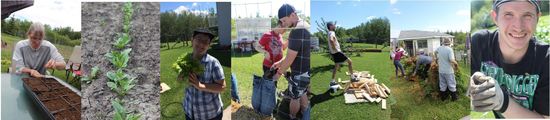
Home on the Range
Home on the Range Green Care Farm is the only registered charity in the greater Edmonton area to offer active, farm-based agricultural opportunities for adults with autism and developmental disabilities. Since 2011, Home on the Range has provided farmers with a safe and welcoming space. Farmers are given access to a farmhouse, greenhouse, potting studio and vast garden plots where they can plant, grow and harvest organic produce. More recently, Home on the Range has added berry-picking, livestock care, pickling and jam-making to their program offerings.
What is a Green Care Farm?
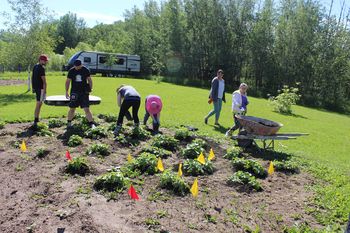 Green Care Farming has used and proven effective in the UK and the Netherlands for many years, where it has become an effective way for adults with autism to thrive in a healthy and supportive environment. This social enterprise offers a slower paced agricultural experience, making it easier for individuals with autism and developmental disabilities to adapt to their calm surroundings
Why Is This Important?
Home on the Range was established in order to fill a gap in programming options available for individuals (primarily aged 14+) with autism & developmental disabilities.
The Need:
- Adults with developmental disabilities often struggle to maintain employment and live independently due to the social, sensory and cognitive demands of work. In fact, it is reported that as many as 80% of adults with autism are unemployed.
- It is expected that there will be a 230% increase in the number of individuals with autism transitioning to adulthood in the next eight years.
- Approximately half a million children and young adults with autism will move out of their homes in the next 10 years.
- Individuals in the Capital Region may wait up to 5 years to find appropriate housing, which means that many adults with disabilities stay at home with aging parents. This significantly limits the available support and programming options, and these individuals often end up isolated and lonely.
- Adults with disabilities do not currently have the choice to live supported in the country or in farm-based environments in the greater Edmonton Region.
What kinds of programs are offered?
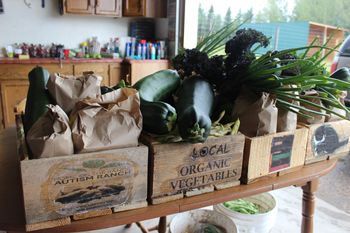 Home on the Range offers offer barrier-free access to healthy and safe farming activities in the following areas:
- Farm-based Day Camps (ages 14+) – May-September
- Therapeutic Teen Group for youth with disabilities (age 13-17) and their parents
- Organic Pallet – Vegetable Box Program, for 10 weeks of what is fresh in our organic gardens
- Farm Field Trips – Special needs classrooms and special needs groups
In addition to the planting, watering, caring for and harvesting of gardens, farmers also participate in crafts, livestock care, outdoor sports, literacy and much more.
The goal is to offer farmers the opportunity to gain greater independence through meaningful work, healthy eating, recreation, self-determination, increased physical activity and community involvement. We are located just ten minutes east of Edmonton, in the community of Ardrossan.
Our Goals
- To create a greater awareness about our organization
- To turn 50-100 at-risk individuals into farmers in 2017
- To raise $1.5 million by 2020 to purchase 80 acres of land or secure a land donation
- To provide housing and social opportunities for 50 individuals with autism and developmental disabilities at our farm by 2025
Please Join Us!
Call or email to learn more:
Donna Brickett-Hammond
Executive Director
Home on the Range Green Care Farm
53350 Range Rd 223, Ardrossan, AB T8E 2L6
780-719-4419
info@autismranch.org
greencarefarm.ca
Face to Face Blindness
I don’t keep a lot of pictures.
I have a few — all framed presents from a friend, a lawyer-in-training with a passion for photography. I liked the composition and the thought behind the gift, so I kept them, hung them on the wall. There’s one of the two of us (three of us, including another friend). Whenever I look at it, he looks exactly like I expect him to — slight, pale, with a prominent nose and an awkward smile. Yet, when I glance away, I am no longer so certain.
 I can never quite picture him in my mind. I know all of his features separately, like a checklist: ears, mouth, eyes — but I can’t put them together in a way that makes sense. It’s not that I don’t know what he looks like – I do. But I know it like I know calculus, the history of the Enlightenment, the conjugations of French verbs, not like I know the taste of strawberry ice cream, the sound of static, the smell of lilac on the breeze. It’s something I’ve memorized, not something I know.
At least he’s not offended by my poor recognition, the fact that his own dear friend couldn’t pick him out of crowd. He laughs at it more often than not, particularly at my grumbling whenever he buys a new pair of shoes or changes to a more seasonable coat. That’s how I recognize people: their glasses, their coats, their shoes – daily accessories that rarely change. Sometimes it's the way they talk, the way they walk, the way they sniff and cough. People, to me, are the sounds they make, the things they wear, the smell of the soap they use to wash their hair. Faces are blurry, ephemeral things, meaningless and strange.
I know what it’s called — face blindness; prosopagnosia, if you don’t mind the mouthful. A rather dry term to explain many of my earliest and most frightening memories of wandering, lost, small and helpless, through a sea of strangers unable to discern or perhaps simply uninterested in my distress. Knowing, all the while, that I might never find my family again, that I might have already passed them, mistaking them for someone else, my eyes sliding right by. I’ve learned how to deal with it, how to cope, but I’ve never forgotten the fear of it — that feeling of miserable desperation, of realizing I could be only a few feet from my mother and never know.
It’s funny now. Now that I’m older. Now that it’s harmless — a strange quirk of my mental processes. Now that it’s the mild embarrassment of ignoring an offended relative waving at me at the library, of squinting at strangers on the bus until I’m quite sure we’ve never met, of standing next to the wrong group at the checkout while my mother tries to get my attention from two lines over where the clerk is already scanning her items. It’s funny because I know what it is, I know how to deal with it, and I know how to explain when people are hurt or confused by my apparent indifference.
 I don’t remember faces, not because I don’t care, but because I can’t. Because my brain doesn’t record the information — my lack of recognition, like an error message, file not found. You and I live in a social world built around the assumption that faces are the focal point, the expression of a person’s thought and moods, a marker of their family history and cultural affiliation. A world of close-ups and portraits and selfies, where being unable to recognize a person at a glance is a reflection of callow rudeness and uncaring egotism. Where I get formal headshots of my young relatives at Christmas, when what I’d dearly like is a clip, a recording of their voices, something that would remind me of them more than dead ink images on glossy paper.
I don’t keep a lot of pictures, because their dearness to others is a reflection of a neurological process I do not have. It has nothing to do with what the people behind the faces mean to me.